There is something powerful happening in Zimbabwe’s digital entertainment space—and if you are paying close attention, you can feel the shift. It is bold, collaborative, and deeply rooted in the everyday experiences of Zimbabweans. I recently watched a short film by one of Zimbabwe’s finest comedic voices, Nijo Tha Slic Pastor, and almost immediately, I knew this was more than just content—it was a statement. Not only about storytelling, but about the future of Zimbabwean entertainment.
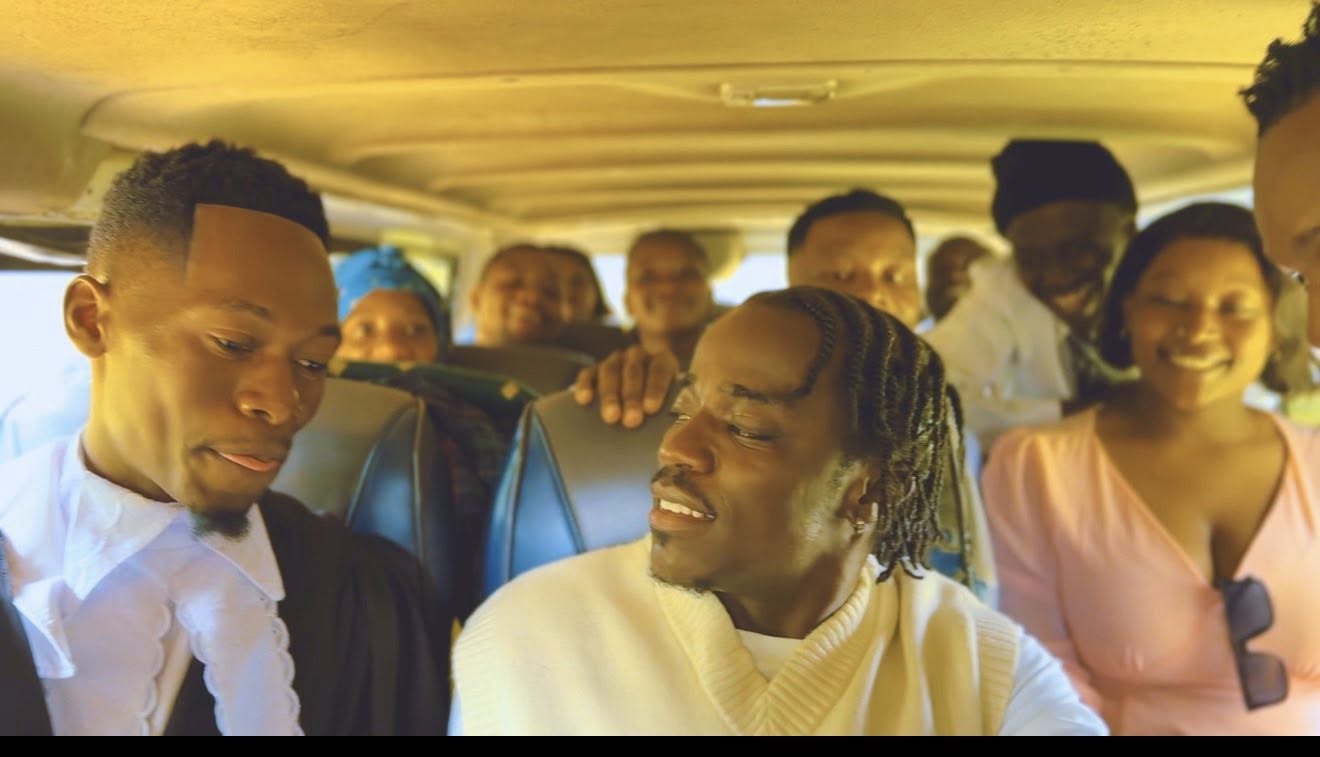
The short film follows a simple but highly relatable storyline. A young man, played by Nijo himself, is running late for an important job interview. Time is not on his side, and like many Zimbabweans, he relies on public transport to get him there. However, he is confronted with a frustrating and all-too-familiar challenge: the combi he boards refuses to leave until it is completely full. What should have been a straightforward commute becomes a test of patience, anxiety, and endurance.
But what truly elevates the film is not just the situation—it is the conversations that unfold inside that combi. This is where the magic lies. The dialogue dives into topics that define everyday Zimbabwean life: relationships (mjolo), religion, economic hardships, and the social realities many people face daily. It is within these interactions that the comedy thrives—organic, sharp, and unapologetically real. You are not just watching actors; you are witnessing reflections of society.

However, beyond the humor and relatability, what struck me the most from the very first minute was the undeniable presence of talent. This was not just a film—it was a gathering of some of Zimbabwe’s most recognized and fast-rising skit makers and content creators. The cast lineup alone tells a compelling story about the direction the industry is taking.
The film features an impressive ensemble including Nigel Maritinyu, Sir Benjamin Rupapa, Gosh Vines, Lord Matthews, Lecture Bhebhe, Scalah, Patricia Putsai, Chiedza Matabuka, Gringo Jnr, Kitso, Jacque Tatenda, Bianca Mango, Sharon Mutsa, and Nutty O. This is not just a cast—it is a movement.
And that movement is built on one critical principle: collaboration.
For years, the conversation within Zimbabwe’s film and theatre industry has revolved around the importance of unity. Many filmmakers have spoken about it, planned for it, and even attempted to organize around it. Yet, tangible results have often been limited. Projects come and go, but very few achieve the kind of cultural impact or consistency needed to push the industry onto competitive international platforms.
In contrast, Zimbabwean skitmakers are moving at an entirely different pace—and with noticeable results.
They are not waiting for perfect conditions. They are not hiding behind the excuse of limited budgets. Instead, they are leveraging what they have: creativity, consistency, and most importantly, each other. Collaboration is not a discussion in their world—it is the norm. And that is why they are winning.
Every time one of these creators releases content—whether it is a short skit or a 30-minute film—it pulls in hundreds of thousands of views, along with massive engagement in the form of likes, shares, and comments. The audience is not only present; it is invested. There is a growing trust between creators and viewers, built on consistency and authenticity.
A common argument within traditional filmmaking circles is that filmmaking requires significant budgets, long production timelines, and complex logistics. While that may be true to an extent, what skit makers are proving is that storytelling does not have to wait for perfection. It simply needs to start.

What is even more exciting is that these skitmakers are no longer confined to short-form content. They are evolving. They are transitioning into structured storytelling—what we can confidently call “proper filmmaking.” They are taking the humor, relatability, and audience connection they have mastered in skits and blending it with cinematic techniques to create something fresh and compelling.
Of course, there is still room for growth. Elements such as camera work, dialogue refinement, and editing techniques need improvement to match global standards. But those are technical gaps that can be closed with time, training, and exposure. What cannot be easily taught—and what they already possess—is the ability to connect with audiences and work together effectively.
That is the real game-changer.
When you compare this collaborative energy to segments of the traditional film industry, a stark difference emerges. One of the key challenges holding the industry back is the tendency for individuals to prioritize personal recognition over collective growth. Instead of building an ecosystem, many are building silos. And in an industry that thrives on teamwork, that approach is limiting.
Skitmakers, on the other hand, are building networks.
They understand that success is not about one person shining—it is about creating something bigger than any individual. And as they continue to collaborate, their output becomes stronger, their reach expands, and their influence grows.
This should serve as both inspiration and a wake-up call to established filmmakers. Because if this level of collaboration begins to merge with high-level technical expertise, the results could be extraordinary. Imagine these creators working alongside seasoned professionals, combining raw talent with refined skill. The potential is enormous.
There are, of course, notable filmmakers who continue to push boundaries and uphold high standards, such as Joe Njagu and Nakai Tsuro. These are individuals who have consistently demonstrated excellence and do not need to feel threatened, but rather encouraged by this new wave of creators.
Because ultimately, this is not a competition—it is an opportunity.
An opportunity to redefine Zimbabwe’s position in the global entertainment landscape.

If collaboration becomes the standard across both skitmakers and traditional filmmakers, there is no reason why Zimbabwe cannot produce films that compete on major platforms like Netflix and Amazon Prime Video, as well as other African streaming services. The talent is already here. The stories are already here. What is needed is alignment.
The way forward is clear: more unity, more collaboration, and a shared vision for growth.
Zimbabwean filmmakers are skilled. They understand storytelling, production, and the demands of the craft. But to truly elevate the industry, there must be a shift from individual ambition to collective execution. Because as the skitmakers are currently demonstrating, when creatives come together with purpose, the results are not just good—they are exceptional.
And if this momentum continues, one thing is certain:
The future of Zimbabwean film is not just promising—it is unstoppable.
No responses yet